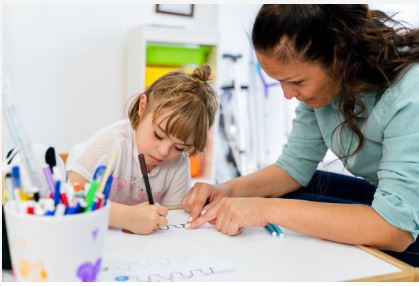
Teaching a special child is one of the most unique tasks. There is no fixed set of rules. A special educator must know the psyche of the child — how they respond or react towards any task or trial.
Today, as a special educator, I am going to share some of the most important rules of special education that every educator must follow.
1. Always keep the latest assessment report
You must have the latest assessment report of the child along with all necessary information from parents, school, etc. This makes your work quick and fruitful. Instead of only thinking or observing, you will be able to analyse and correlate the child’s behaviour, capacity and ability.
📎 Related Free Resource · Autism Spectrum
What Is ABA Therapy for Autism? A Simple & Practical Guide for ParentsABA stands for Applied Behaviour Analysis. It is an approach to understanding how behavior and learning are influenced by a perso…
📥 Download Free2. Build rapport with the child
A special educator must build a good relationship with the child. Otherwise the child will always try to defend the situation. You cannot be harsh with them because that only creates more rigidity in the child.
3. Understand their core strengths
You really need to find out the best in the child. On the basis of existing capacity you can plan the next step and connect the learning pattern with that ability.
For example, if the child is good in logical thinking, you can motivate him towards mathematics.
If the child is a visual learner, you can motivate him to learn through images and stories.
4. Reading difficulty is very common
One of the most important and most common issues faced by special educators is reading. Most children get stuck with alphabets. Blending becomes a big problem and that is why their reading ability gets affected. This happens because of language and understanding delay. Their brain is not able to process the information properly. But yes, it becomes possible with regular practice and by creating neural pathways — just like we do in occupational therapy. In the same way the child starts learning.
5. Communicate the day’s plan
Special education should start every day by explaining and asking questions about the day plan. Tell the child: “Today we will do this activity. Do you like it? Then we will take a small break and after that we will do something very exciting.”
The reason for communicating in this way is to make the child ready for study. Because of low concentration, most ASD children look for ways to escape. You can try this method. Parents can also apply the same tips and tricks at home.
These practices, when followed with patience and consistency, make a real difference in the child’s learning journey.
For more useful tips and guidance, please contact
Ms. Sarita
📞 9899878180
Free Resources Related to This Post
ABA stands for Applied Behaviour Analysis. It is an approach to understanding how behavio…
📥 Download FreeA practical, parent-friendly guide with clear academic goals for phonics, numbers, Hindi V…
📥 Download FreePlan the future of your autistic child with confidence. Learn about legal guardianship, Na…
📥 Download FreeHow Parents of Autistic and ADHD Children Can Overcome Stress, Financial Pressure, Stigma …
📥 Download FreeYou Might Also Find Helpful

🏫 Educator Resources · 21 Oct 2026
Identify Dyslexia in Your Child: A Guide for Indian ParentsDiscover practical ways to recognize dyslexia early in your child. This empathetic guide offers real…

🏫 Educator Resources · 12 Oct 2026
Cerebral Palsy and Physiotherapy in India: A Parent’s GuideDiscover how physiotherapy can transform the lives of children with cerebral palsy in India. This em…
🏫 Educator Resources · 12 Sep 2026
ADHD & Gifted Kids in India: Guide to Twice‑Exceptional LearnersDiscover how ADHD and giftedness can coexist in Indian children, why they are called twice‑excepti…