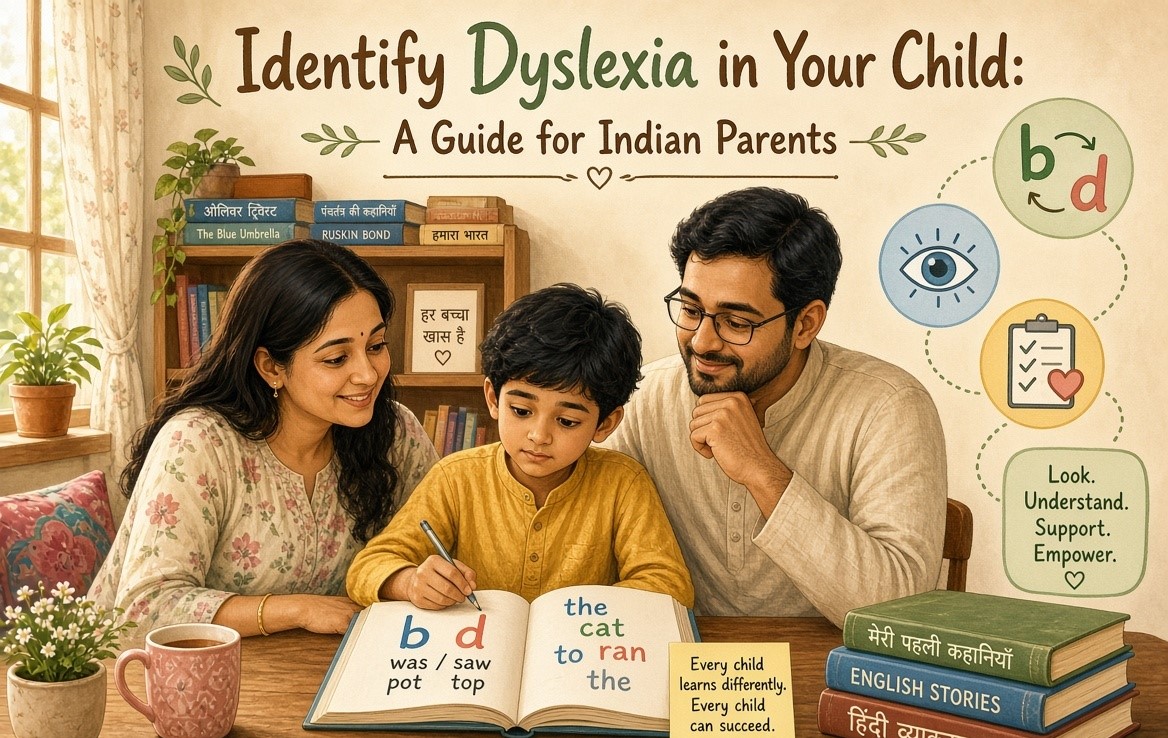
Understanding Dyslexia: The First Step
Imagine watching your five‑year‑old struggle to copy the word "sun" during a Diwali story‑time, while classmates breeze through it. You feel a knot of worry, wondering if it’s just a phase or something deeper. Dyslexia—a neuro‑developmental difference that affects reading, spelling and sometimes speech—affects 1 in 10 Indian children, yet many signs go unnoticed until the pressure of school exams mounts.
What Exactly Is Dyslexia?
Dyslexia is not a lack of intelligence; it is a brain‑based difference in processing written language. In the Indian context, where multiple scripts (Devanagari, Tamil, Bengali, etc.) are taught simultaneously, the challenge can be amplified. Children with dyslexia often have average or above‑average IQ, but they may read slowly, mix up letters, or have trouble spelling familiar words.
Early Warning Signs You Can Observe at Home
1. Language Milestones Missed
- Late talking or difficulty forming sentences before age 3.
- Struggles with rhyming games during festivals like Holi or Navratri.
2. Trouble with Letter‑Sound Connections
- Confusing similar‑looking letters such as "b" and "d" or "न" and "न" in Hindi.
- Unable to blend sounds to form simple words like "cat" or "घर".
3. Reading Fatigue
- Gets tired quickly when reading storybooks, especially during bedtime stories.
- Prefers listening to audio versions of stories rather than reading.
4. Spelling and Writing Difficulties
- Spells familiar words inconsistently—"apple" as "aple" one day, "appple" the next.
- Writes letters backward or upside‑down, especially in Hindi or regional scripts.
5. Behavioral Clues
- Avoids school‑related activities that involve reading.
- Shows anxiety or low self‑esteem during classroom reading time.
School‑Based Indicators
Even if your child seems fine at home, school can reveal hidden difficulties. Indian classrooms often rely on rote learning, making dyslexia more noticeable when a child cannot keep up.
📎 Related Free Resource · Speech & Language
Best Home Speech Therapy Activities for Autism | Parent GuidePractical 2-page parent guide with warm illustrations of mom & child. Covers slow talking, picture cards (water, food, toilet)…
📥 Download FreeCommon Classroom Red Flags
- Consistently low scores in language‑based subjects despite effort.
- Difficulty following written instructions for art, science labs, or homework.
- Frequent misreading of exam questions, leading to wrong answers.
- Reluctance to participate in reading aloud sessions during festivals or school functions.
When to Seek Professional Help
If you notice two or more of the above signs persisting for more than six months, it’s time to consult a specialist. In India, you can approach a child psychologist, speech‑language pathologist, or a special educator trained in dyslexia assessment.
Key Assessment Steps in India
- Initial Screening: School counselors or pediatricians often conduct a quick screening using tools like the NIMHANS Dyslexia Screening Test.
- Comprehensive Evaluation: A multidisciplinary team (psychologist, special educator, speech therapist) conducts detailed tests covering phonological awareness, decoding skills, and visual‑motor integration.
- Diagnostic Report: The report outlines strengths, challenges, and recommended accommodations under the Rights of Persons with Disabilities (RPWD) Act, 2016.
Practical Strategies for Parents
Early intervention can dramatically improve outcomes. Below are evidence‑based practices that fit Indian households and school environments.
1. Multisensory Learning at Home
Use the Orton‑Gillingham approach—touch, sight, sound, and movement. For example, while teaching the letter "क", let your child trace it in sand, say the sound, and then write it on a whiteboard.
2. Leverage Indian Stories and Festivals
Integrate dyslexia‑friendly activities into cultural celebrations. During Vasant Panchami, ask children to create a picture‑dictionary of mythological characters, pairing images with phonetic cues.
3. Technology Aids
- Text‑to‑Speech Apps: Google Text‑to‑Speech supports Hindi, Marathi, Tamil, etc., and can read textbooks aloud.
- Reading Apps: “Kitaaboo” and “Madhur” offer dyslexia‑friendly fonts and adjustable line spacing.
- Assistive Devices: Colored overlays and dyslexia‑specific fonts (like OpenDyslexic) can be used on school computers under the Samagra Shiksha scheme.
4. Collaboration with Teachers
Request an Individual Education Plan (IEP) under the Inclusive Education policy. Include accommodations such as extra time, oral examinations, or use of audio books during board exams.
5. Government Schemes and Support
- Integrated Education for Disabled Children (IEDC): Provides special educators and learning material in many states.
- Samagra Shiksha Abhiyan: Funds for inclusive classrooms, assistive technology, and teacher training.
- National Trust Grants: Financial assistance for families to purchase learning aids.
Building a Supportive Environment
In joint families, relatives may unintentionally pressure the child to “study harder.” Open communication is essential. Explain dyslexia in simple terms, share success stories of Indian personalities like Nobel laureate Dr. Venkatraman Ramakrishnan, and celebrate small victories.
Peer Support
Encourage participation in after‑school clubs where reading is fun, such as storytelling circles during Raksha Bandhan or poetry recitals in school fests. Peer acceptance reduces stigma.
Key Takeaways
- Early signs of dyslexia include delayed speech, letter‑sound confusion, and reading fatigue—watch for them at home and school.
- Seek a multidisciplinary assessment if signs persist for six months or more; the RPWD Act ensures legal accommodations.
- Multisensory, culturally relevant learning (using festivals, Indian stories) boosts engagement and retention.
- Leverage Indian‑friendly tech tools and government schemes like Samagra Shiksha for assistive resources.
- Collaborate closely with teachers to create an IEP that includes extra time, oral exams, and audio materials.
- Foster a supportive family atmosphere—celebrate progress, share role models, and involve extended family in the journey.
Empowering the Journey Ahead
Discovering dyslexia can feel overwhelming, but it also opens a path to tailored support that honors your child’s unique strengths. With the right strategies, Indian schools increasingly embrace inclusive practices, and government initiatives are paving the way for accessible learning. Trust your instincts, partner with professionals, and remember that every step—no matter how small—brings your child closer to confidence and success. Together, we can turn challenges into triumphs, ensuring that every child shines brightly, whether under the lights of a school auditorium or the lanterns of Diwali night.
Free Resources Related to This Post
You Might Also Find Helpful

🏫 Educator Resources · 12 Oct 2026
Cerebral Palsy and Physiotherapy in India: A Parent’s GuideDiscover how physiotherapy can transform the lives of children with cerebral palsy in India. This em…
🏫 Educator Resources · 12 Sep 2026
ADHD & Gifted Kids in India: Guide to Twice‑Exceptional LearnersDiscover how ADHD and giftedness can coexist in Indian children, why they are called twice‑excepti…
🏫 Educator Resources · 03 Sep 2026
Inclusive Education for Down Syndrome Children in IndiaA warm, step‑by‑step guide for Indian parents and teachers on how to create truly inclusive clas…