Hook: A Moment Every Indian Parent Recognises
It was Diwali night in Delhi, the streets glittered with lanterns, and the house buzzed with cousins, aunts, and the clatter of fireworks. Amid the celebration, your child suddenly covered their ears, eyes wide, and retreated to the corner, or perhaps they erupted into a scream that echoed through the living room. In that split second, you wondered: is this a tantrum, a behavioural issue, or something deeper? Understanding whether your child is experiencing a meltdown or a shutdown can change the way you respond, calm the situation, and protect their emotional wellbeing.
What Is a Meltdown?
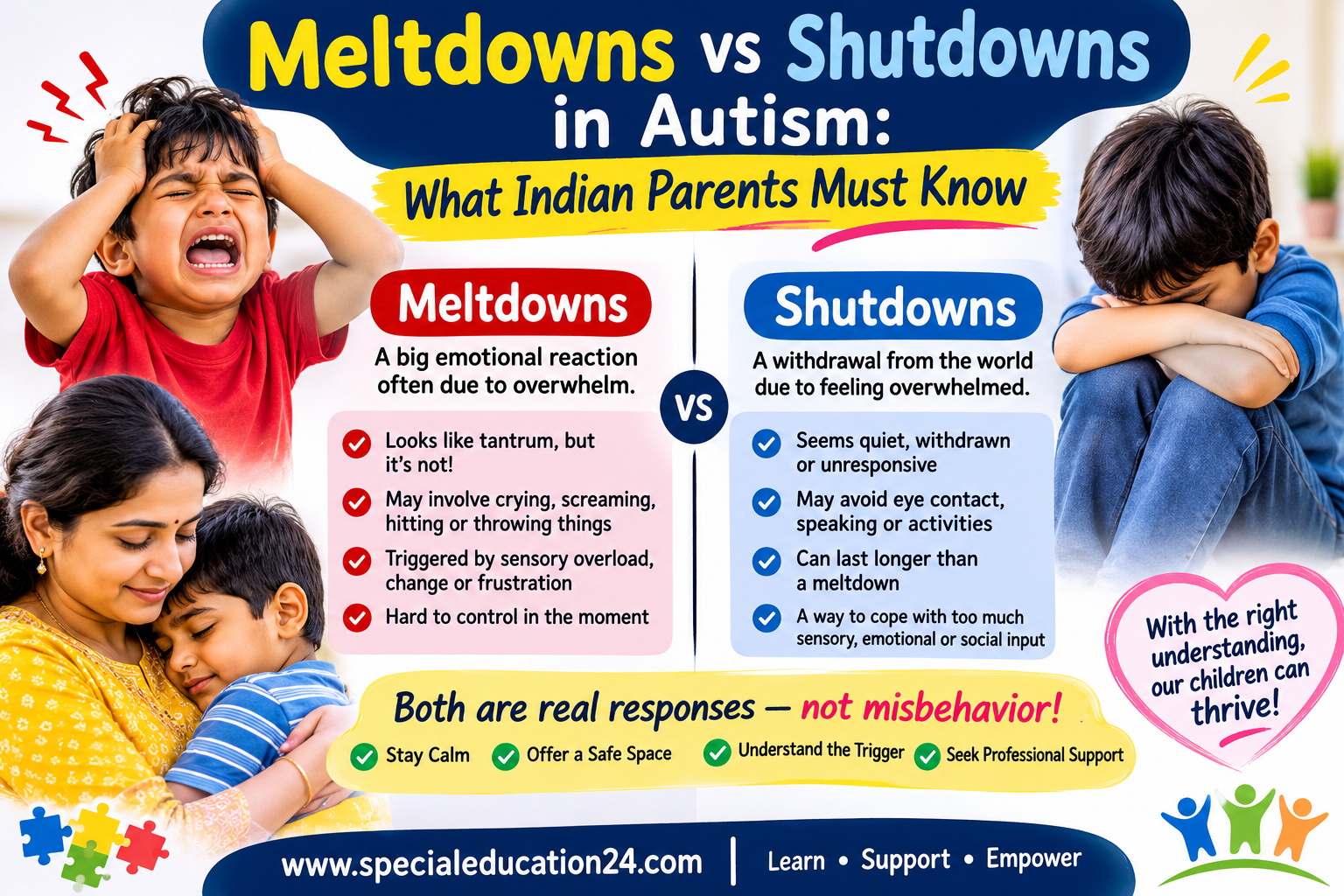
A meltdown is an intense, outward expression of overwhelming stress. It often looks like a storm: shouting, crying, flailing, or even aggressive behaviours such as hitting or throwing objects. The child is trying to release a flood of sensory, emotional, or cognitive overload that they cannot process internally.
Typical Signs
- Sudden, high‑volume vocalisations (screaming, yelling)
- Physical agitation – running, throwing, hitting
- Escalating anxiety that feels out of the child’s control
- Rapid breathing, flushed face, or tears
- Difficulty staying in one place; may try to escape the environment
Why Meltdowns Occur
In the Indian context, meltdowns can be triggered by crowded festivals, noisy school buses, bright lights of a Bollywood movie, or the sensory overload of a bustling market in Mumbai. They may also arise from communication breakdowns, unexpected changes to routine (like a sudden school timetable shift), or academic pressure during board exam preparations.
📎 Related Free Resource · Autism Spectrum
What Is ABA Therapy for Autism? A Simple & Practical Guide for ParentsABA stands for Applied Behaviour Analysis. It is an approach to understanding how behavior and learning are influenced by a perso…
📥 Download FreeWhat Is a Shutdown?
A shutdown is the opposite reaction: the child turns inward, becoming silent, still, and often non‑responsive. Instead of releasing the overload, they retreat into a protective shell, conserving energy and avoiding further stimulation.
Typical Signs
- Sudden silence or loss of speech
- Staring blankly, reduced eye contact
- Freezing or sitting motionless for minutes
- Decreased movement, limp posture
- Difficulty following simple instructions
Why Shutdowns Occur
Shutdowns can be sparked by similar triggers as meltdowns, but the child’s coping style leans toward withdrawal. In a joint‑family setting, the constant chatter of relatives, the smell of incense, or the heat of a summer wedding can overwhelm a sensory‑sensitive child, prompting them to shut down.
Key Differences at a Glance
Both meltdowns and shutdowns are responses to overload, yet they differ in expression, duration, and the child’s needs during the episode.
| Aspect | Meltdown | Shutdown |
|---|---|---|
| Behaviour | External, loud, active | Internal, quiet, passive |
| Energy | High, explosive | Low, depleted |
| Communication | Verbal outbursts, gestures | Minimal speech, may not respond |
| Recovery | Often quick after calm environment | May take longer to re‑engage |
Why Understanding the Difference Matters for Indian Families
India’s education system, joint‑family structures, and cultural expectations place unique pressures on neurodivergent children. Misreading a shutdown as defiance can lead to harsh discipline, while treating a meltdown as a simple tantrum may result in missed therapeutic opportunities. Knowing the distinction empowers parents to tailor interventions that respect the child’s neurotype and cultural context.
Recognising Triggers in an Indian Setting
Identifying specific triggers is the first step toward prevention. Below are common Indian scenarios that can set off meltdowns or shutdowns.
Festivals and Celebrations
- Diwali fireworks – loud sounds and bright flashes
- Holi colour throws – unexpected tactile sensations
- Wedding processions – crowded streets, music, and unfamiliar faces
School Environment
- Board exam pressure and competitive grading
- Open‑plan classrooms with multiple teachers speaking simultaneously
- Switching schools between 10th and 12th standards (often across cities)
Transportation
- Overcrowded local trains during rush hour
- Bus rides without seat belts or adequate ventilation
- Long road trips to family homes in remote villages
Joint Family Dynamics
- Frequent visitors, cousins, and loud conversations
- Unpredictable schedules – sudden meals, prayer times
- Pressure to conform to cultural expectations (e.g., early marriage talk)
Practical Strategies for Parents
Below are evidence‑based, culturally relevant tactics you can implement at home, in school, and during community outings.
Creating a Sensory‑Friendly Space
- Designate a quiet corner at home with a soft mat, dim lighting, and a weighted blanket (available on Indian e‑commerce sites like Amazon.in and FirstCry).
- Use noise‑cancelling headphones during festivals or crowded train rides.
- Keep a sensory toolkit: fidget toys, scented play‑dough, and a portable visual schedule.
Pre‑Event Preparation
- Show pictures or short videos of upcoming events (e.g., a wedding venue) and discuss what will happen.
- Create a simple visual timetable in Hindi, Tamil, or your regional language to outline the day’s sequence.
- Practice coping phrases in the child’s preferred language, such as “I need a break” or “Help me, please.”
During a Meltdown
- Stay Calm: Your voice should be low and steady; children mirror adult arousal.
- Provide Space: Gently guide them to a pre‑arranged safe spot, avoiding direct confrontation.
- Validate Feelings: Use short sentences – “I see you are upset. It’s okay to feel angry.”
- Reduce Stimuli: Turn off TV, dim lights, and remove loud toys.
- Use a Sensory Anchor: Offer a weighted lap pad or a chewable necklace.
During a Shutdown
- Give Gentle Time: Allow a few minutes of silence before prompting.
- Offer a Choice: “Would you like to sit on the couch or the mat?” Choices restore a sense of control.
- Use Minimal Verbal Cues: Point, use picture cards, or write simple words.
- Check Physical Needs: Ensure they are not hungry, thirsty, or uncomfortable.
- Gradual Re‑Engagement: Start with a low‑sensory activity like coloring or listening to a soft bhajan.
Collaborating with Schools
- Request an Individualised Education Plan (IEP) that includes sensory breaks and a quiet room.
- Share the child’s visual schedule with teachers so they can anticipate transitions.
- Educate staff about the difference between meltdowns and shutdowns; suggest “pause cards” that students can use to signal overload.
Leveraging Government Schemes
- Integrated Child Development Services (ICDS): Offers early intervention services in many states; inquire about sensory‑friendly activities.
- NIDAN (National Initiative for Development and Advocacy for Neurodiverse): Provides funding for assistive devices and therapist referrals.
- Special Education Scheme (SPS) under the Ministry of Education: Allows schools to receive grants for inclusive infrastructure, such as sound‑proof rooms.
When to Seek Professional Help
While many meltdowns and shutdowns can be managed with strategies above, persistent episodes that interfere with learning, daily living, or cause injury warrant professional evaluation.
- Child Psychologist or Developmental Paediatrician: For assessment of anxiety, sensory processing disorder, or co‑occurring conditions.
- Occupational Therapist (OT): To design a personalised sensory diet and recommend adaptive equipment.
- Speech‑Language Pathologist (SLP): If communication breakdowns contribute to shutdowns.
Major Indian cities like Bangalore, Hyderabad, and Pune host specialised centres (e.g., The Autism Society of India, Asha Centre) that offer multidisciplinary services at subsidised rates under government schemes.
Key Takeaways
- Meltdowns are outward, high‑energy reactions; shutdowns are inward, low‑energy retreats.
- Both stem from sensory or emotional overload – common in Indian festivals, crowded transport, and joint‑family settings.
- Recognising the type of episode guides the appropriate response: active calming for meltdowns, gentle space for shutdowns.
- Use visual schedules, sensory toolkits, and pre‑event preparation to reduce triggers.
- Partner with schools for IEPs and inform teachers about the distinction to foster inclusive classrooms.
- Tap into Indian government schemes (ICDS, NIDAN, SPS) for financial support and professional services.
Empowering the Journey Ahead
Every Indian parent walks a unique path with their neurodivergent child, navigating bustling streets, vibrant festivals, and a rich tapestry of cultural expectations. By distinguishing meltdowns from shutdowns, you gain a powerful lens to view your child’s needs compassionately and respond effectively. Remember, you are not alone – a growing community of parents, educators, and specialists across India is ready to support you. Embrace the knowledge, apply the strategies, and watch your child thrive amidst the colors, sounds, and celebrations that make our country so extraordinary.
Free Resources Related to This Post
ABA stands for Applied Behaviour Analysis. It is an approach to understanding how behavio…
📥 Download FreeLooking for a balanced approach to support a child with autism? This resource shares a pra…
📥 Download FreePlan the future of your autistic child with confidence. Learn about legal guardianship, Na…
📥 Download FreeA practical, parent-friendly guide with clear academic goals for phonics, numbers, Hindi V…
📥 Download FreeYou Might Also Find Helpful
🧩 Autism Corner · 21 Oct 2026
3‑Month Phonics Goal (A‑P) for Mild ASD: IEP Guide for 3‑7 yrA practical, step‑by‑step IEP plan for Indian parents and teachers to teach phonics (A‑P) over…

🧩 Autism Corner · 17 Sep 2026
ABA Therapy for US Parents: What Indian Parents Must KnowDiscover the essential facts about ABA therapy in the United States that Indian parents and educator…

🧩 Autism Corner · 17 Sep 2026
ABA Therapy Global Results: What Indian Parents Need to KnowExplore the worldwide evidence behind Applied Behavior Analysis (ABA) therapy, understand how the da…