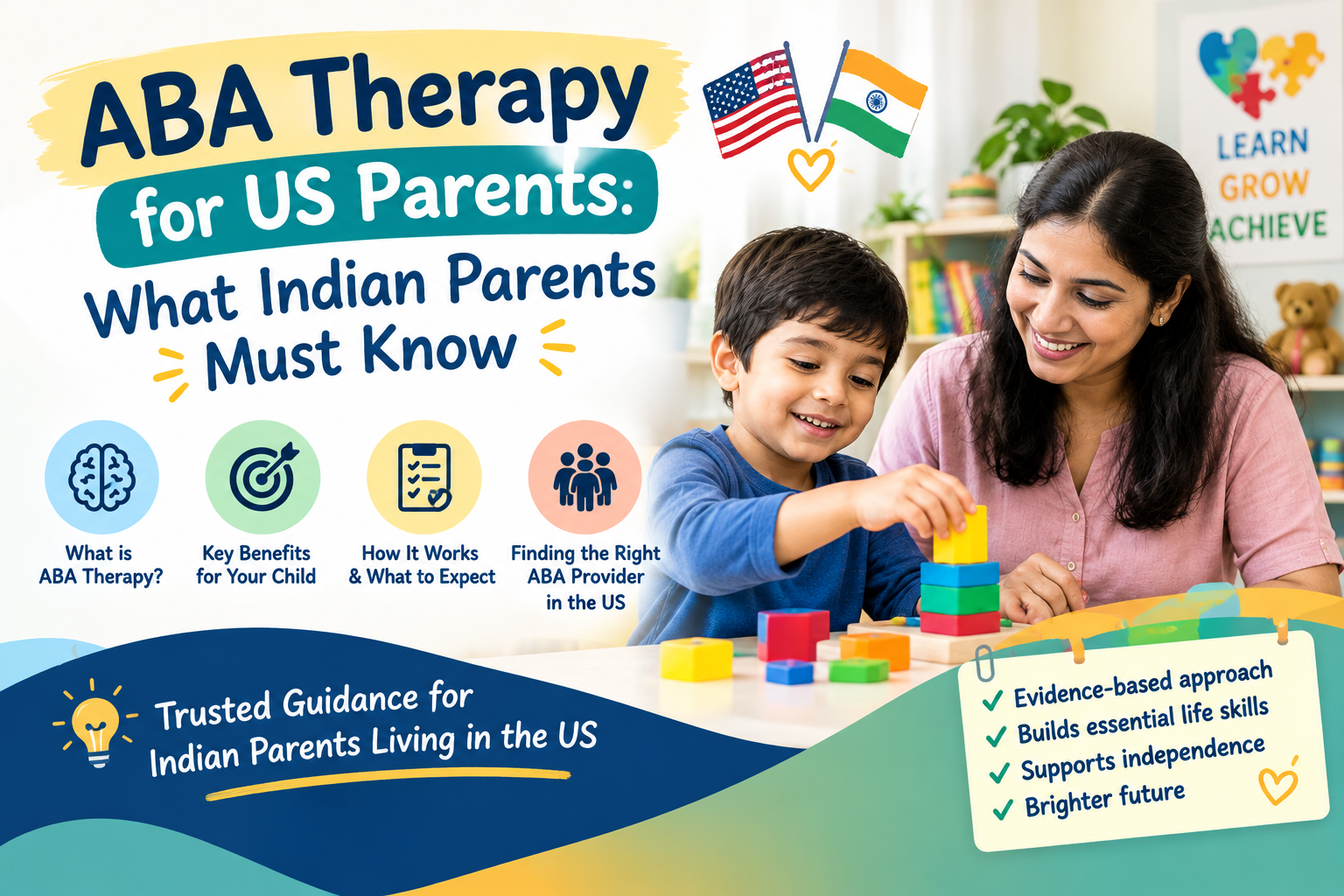
Why This Guide Matters to Indian Parents
Imagine scrolling through a WhatsApp group of Mumbai parents, each sharing stories of their child’s progress in a US‑based ABA clinic. The excitement is palpable, but the questions are even louder: "Can we afford this?" "Will the same methods work with our joint‑family dynamics?" "How do we navigate insurance?" This article answers those questions, offering a warm, practical roadmap for Indian parents who want the best of US ABA therapy while staying rooted in Indian realities.
What Is ABA Therapy?
Applied Behavior Analysis (ABA) is a science‑based approach that uses the principles of learning and behavior to improve socially significant skills and reduce challenging behaviors. It is highly individualized, data‑driven, and often delivered in one‑on‑one sessions, group settings, or natural environments like home and school.
Core Components
- Discrete Trial Training (DTT): Structured teaching using clear prompts, responses, and reinforcement.
- Naturalistic Developmental Behavioral Interventions (NDBI): Embeds learning within everyday activities.
- Functional Behavior Assessment (FBA): Identifies why a behavior occurs to design effective interventions.
- Data Collection: Every session is measured to track progress and adjust plans.
Why US Parents Choose ABA
In the United States, ABA enjoys robust support from state Medicaid programs, private insurers, and school districts under the Individuals with Disabilities Education Act (IDEA). This financial backing, combined with a mature provider network and decades of research, makes ABA the gold standard for many American families.
📎 Related Free Resource · Autism Spectrum
What Is ABA Therapy for Autism? A Simple & Practical Guide for ParentsABA stands for Applied Behaviour Analysis. It is an approach to understanding how behavior and learning are influenced by a perso…
📥 Download FreeKey Advantages
- Insurance coverage often reduces out‑of‑pocket costs.
- Clinics specialize in age‑specific programs—from toddlers to adults.
- Therapists are typically Board‑Certified Behavior Analysts (BCBAs) with rigorous training.
How ABA Differs Between the US and India
While the scientific foundation is identical, implementation varies because of cultural, regulatory, and economic factors.
Regulatory Landscape
In the US, ABA services are mandated under IDEA and many states have explicit Medicaid reimbursement codes. In India, there is no national mandate; services are largely private, though some NGOs receive government grants.
Cultural Nuances
American families often have nuclear structures, allowing focused one‑on‑one sessions. Indian families may live in joint households where grandparents, aunts, and cousins share caregiving duties. This can be a strength—more hands to reinforce skills—but also a challenge when consistency is needed.
Language and Communication
US clinics typically operate in English, which aligns with many Indian urban families. However, regional language support (Hindi, Tamil, Bengali, etc.) is crucial for home implementation in India.
Choosing the Right ABA Provider in the US
If you are considering sending your child to a US clinic or hiring a US‑based remote provider, follow this checklist.
Credentials to Verify
- BCBA or BCaBA certification from the Behavior Analyst Certification Board (BACB).
- State licensure, if required (e.g., California, Texas).
- Accreditation by the Association for Behavior Analysis International (ABAI).
Questions to Ask the Clinic
- What is the therapist‑to‑child ratio?
- How is progress measured and reported?
- Do you offer parent training modules?
- Is there flexibility for culturally relevant adaptations (e.g., incorporating Indian festivals into social skills training)?
Funding and Insurance: Navigating the Money Maze
Understanding the financial side is often the biggest hurdle for Indian parents.
US Options
- Medicaid: Most states cover ABA for children with autism under waivers (e.g., HCBS Waiver). Eligibility depends on income and disability criteria.
- Private Insurance: Many plans now include ABA after the Mental Health Parity and Addiction Equity Act (MHPAEA). Always request a detailed coverage letter.
- School‑Based Funding: Under IDEA, public schools must provide related services, which can include ABA.
Indian Perspective
While India lacks a universal ABA insurance model, there are emerging avenues:
- Ayushman Bharat: Some private hospitals list ABA under rehabilitative services; check state‑specific listings.
- Employer‑Sponsored Health Plans: Larger corporations (e.g., Tata, Infosys) sometimes cover therapy costs.
- NGO Grants: Organizations like the Autism Society of India offer partial subsidies.
If you plan to bring a US‑trained therapist to India for remote sessions, discuss payment structures early—many providers accept international bank transfers or PayPal.
Adapting ABA to Indian Home and School Environments
Successful ABA hinges on consistency. Here are practical ways to blend US‑based strategies with Indian daily life.
Integrate Festivals and Rituals
Use Diwali lights, Holi colors, or Navratri dances as naturalistic teaching moments. For example, teach turn‑taking during a family game of antakshari or reinforce eye contact while offering sweets during prasad distribution.
Leverage Joint Family Support
Assign specific reinforcement roles: grandparents can be “reward dispensers,” cousins can model peer interaction, and parents can oversee data collection. Create a simple weekly chart in Hindi or regional language to track prompts and reinforcers.
Home‑Based Data Collection
Use free apps like BehaviorSnap or a printable Excel sheet. Keep entries brief—time of day, skill targeted, success/failure, and type of reinforcement. Review the data weekly with the therapist via Zoom.
School Collaboration
Many Indian schools follow the Central Board of Secondary Education (CBSE) or state curricula. Request an Individualized Education Plan (IEP) meeting and share ABA data sheets. Encourage teachers to embed ABA prompts during classroom routines, such as lining up for the school assembly.
Common Misconceptions About ABA
Addressing myths helps parents make informed decisions.
Myth 1: ABA Is Only for “Severe” Autism
ABA is effective across the spectrum, from early intervention for toddlers to skill‑building for adults seeking employment.
Myth 2: ABA Is “Cold” or “Punitive”
Modern ABA emphasizes positive reinforcement, naturalistic learning, and respect for the child’s dignity.
Myth 3: You Need a Full‑Time Therapist
Hybrid models combine weekly therapist visits with intensive parent‑implemented sessions, reducing cost while maintaining efficacy.
Frequently Asked Questions (FAQ)
- Do I need to relocate to the US for ABA? Not necessarily. Remote tele‑ABA is growing, especially after the pandemic. Choose a provider comfortable with cross‑cultural coaching.
- How long does it take to see results? Early intensive programs (20‑40 hours/week) can show measurable gains within 3‑6 months, but progress varies per child.
- Can ABA address co‑occurring ADHD or sensory issues? Yes. ABA integrates sensory integration strategies and executive‑function coaching tailored to ADHD.
- Is there a legal requirement for schools in India to provide ABA? No national law mandates it, but many private schools are adopting inclusive practices; advocate using the Right to Education (RTE) Act.
Key Takeaways
- ABA is evidence‑based, data‑driven, and adaptable to Indian cultural contexts.
- US funding sources (Medicaid, private insurance, IDEA) differ from India’s emerging schemes; plan finances early.
- Choose providers with BCBA certification, ask detailed questions, and ensure they respect Indian languages and festivals.
- Leverage joint‑family support for consistent reinforcement and data collection.
- Remote tele‑ABA can bridge geographic gaps while keeping costs manageable.
Empowering the Journey Ahead
Whether you are exploring a US clinic, hiring a remote therapist, or simply wanting to bring ABA principles into your Mumbai home, remember that the heart of ABA is love‑filled teaching. By blending scientific rigor with Indian warmth—celebrating festivals, involving extended family, and honoring regional languages—you are creating a powerful bridge for your child’s growth. Stay curious, stay compassionate, and trust that each small step, each data point, and each smile brings you closer to the future you envision for your neurodivergent star.
Free Resources Related to This Post
ABA stands for Applied Behaviour Analysis. It is an approach to understanding how behavio…
📥 Download FreeLooking for a balanced approach to support a child with autism? This resource shares a pra…
📥 Download FreeA practical, parent-friendly guide with clear academic goals for phonics, numbers, Hindi V…
📥 Download FreePlan the future of your autistic child with confidence. Learn about legal guardianship, Na…
📥 Download FreeYou Might Also Find Helpful
🧩 Autism Corner · 21 Oct 2026
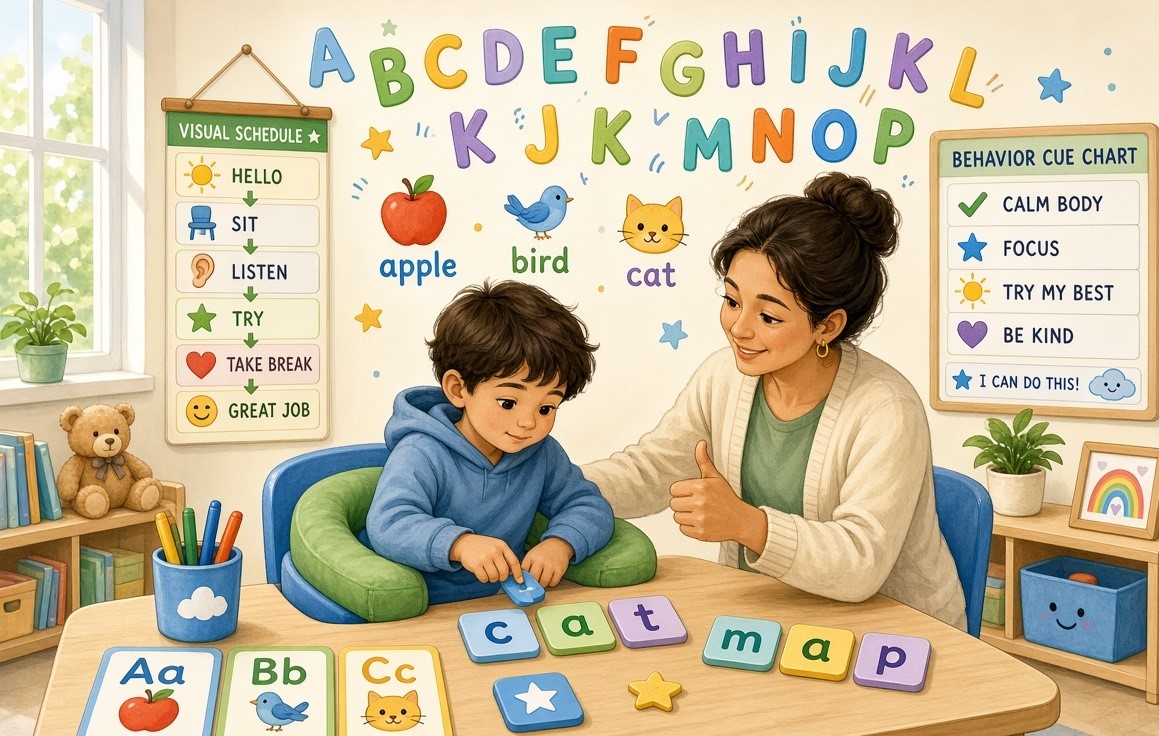
3‑Month Phonics Goal (A‑P) for Mild ASD: IEP Guide for 3‑7 yrA practical, step‑by‑step IEP plan for Indian parents and teachers to teach phonics (A‑P) over…

🧩 Autism Corner · 17 Sep 2026
ABA Therapy Global Results: What Indian Parents Need to KnowExplore the worldwide evidence behind Applied Behavior Analysis (ABA) therapy, understand how the da…

🧩 Autism Corner · 17 Sep 2026
Weighted Blankets & Sensory Tools for Indian Kids: Do They Work & Where to Buy?Discover whether weighted blankets and other sensory tools truly help neurodivergent children in Ind…