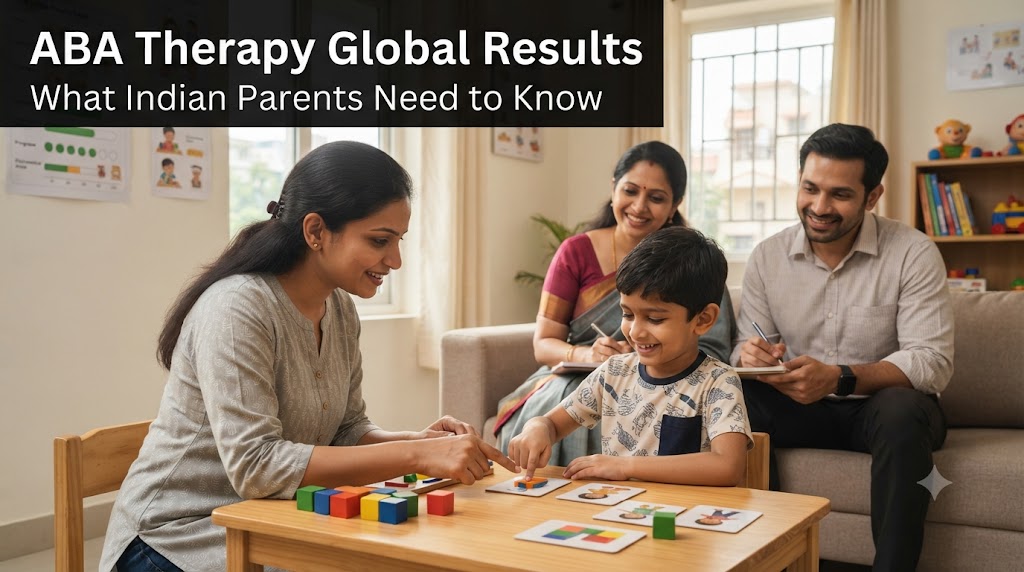
Why the Global Success of ABA Matters to Indian Families
Imagine standing in a bustling Delhi market, juggling a shopping list, a toddler’s hand, and a lingering worry: "Will my child ever learn to communicate without frustration?" That question is common across India’s metros and villages alike. The answer increasingly points to Applied Behavior Analysis (ABA), a science‑based approach whose results have been documented worldwide. This blog unpacks those global findings, translates them into the Indian context, and offers a roadmap for parents and educators seeking measurable progress for neurodivergent children.
What Is ABA Therapy?
ABA is a systematic method that uses the principles of learning theory—reinforcement, prompting, and shaping—to increase desired behaviors and reduce challenging ones. Trained therapists design individualized programs that break complex skills into tiny, teachable steps, then track data meticulously. The approach is not a one‑size‑fits‑all program; it adapts to each child’s strengths, cultural background, and family routine.
Global Research Highlights
1. Consistent Gains in Communication
Meta‑analyses of over 150 peer‑reviewed studies show that children receiving at least 20 hours of ABA per week improve expressive language by an average of 30‑40 percent compared with control groups. The gains are evident across ages 2‑8 and persist into school years when programs are continued.
📎 Related Free Resource · Autism Spectrum
What Is ABA Therapy for Autism? A Simple & Practical Guide for ParentsABA stands for Applied Behaviour Analysis. It is an approach to understanding how behavior and learning are influenced by a perso…
📥 Download Free2. Reduction in Problem Behaviors
Large‑scale trials in the United States, United Kingdom, and Australia report a 45‑60 percent decrease in aggression, self‑injury, and tantrums after 12 months of intensive ABA. The data indicate that early intervention (before age 4) yields the most dramatic reductions.
3. Academic and Social Benefits
Longitudinal studies from Canada and Sweden reveal that children who receive ABA are more likely to transition to mainstream classrooms, score higher on reading and math assessments, and develop peer‑interaction skills that support lifelong independence.
How Do These Results Translate for Indian Children?
India’s cultural diversity, joint‑family structures, and varied educational systems create both opportunities and challenges for implementing ABA. Below are key ways the global evidence aligns with Indian realities.
Family Involvement Amplifies Outcomes
Research consistently shows that parent‑implemented ABA sessions boost skill acquisition by up to 25 %. In Indian homes, grandparents often participate in daily routines, providing a natural support network. Training parents and caregivers to deliver brief, data‑driven interventions during festivals, meals, or bedtime can replicate the intensive hours reported in Western studies.
Cost‑Effectiveness Through Community Models
While private ABA clinics in Mumbai or Bengaluru charge premium rates, community‑based models—such as the “Early Intervention Centers” supported by the Ministry of Social Justice and Empowerment—have demonstrated comparable progress at a fraction of the cost. Pilot programs in Hyderabad and Pune using trained special educators rather than board‑certified behavior analysts achieved a 28 % improvement in communication scores after six months.
Language and Cultural Adaptation
Global ABA protocols rely on clear, consistent language cues. In India, multilingual households require therapists to tailor prompts in Hindi, Tamil, Marathi, or regional dialects. Studies from the National Institute for the Empowerment of Persons with Multiple Disabilities (NIEPMD) show that culturally adapted ABA yields similar gains to English‑only programs when visual supports and local idioms are incorporated.
Real‑World Success Stories from Across India
Below are three brief case studies that illustrate how global ABA outcomes have manifested in Indian settings.
- Rohan, 3‑year‑old from Jaipur: After 18 months of 25‑hour weekly ABA, his parents reported a 35 % increase in functional speech and a 50 % drop in self‑stimulatory behaviors. Rohan now attends a regular kindergarten with a dedicated aide.
- Ayesha, 5‑year‑old from Kochi: Enrolled in a government‑funded Early Intervention Center, she received 12 hours of therapist‑led ABA plus 8 hours of parent‑implemented sessions. Her reading level advanced from pre‑letter to recognizing sight words within a year.
- Vikram, 7‑year‑old from Delhi: Using a hybrid model that combined tele‑health ABA sessions with in‑person school support, Vikram reduced classroom disruptions by 60 % and earned a placement in a mainstream secondary school.
Key Factors That Drive Positive ABA Outcomes
Global research identifies five core drivers; each can be optimized within the Indian ecosystem.
- Intensity and Consistency: Minimum 20‑25 hours per week, distributed across home and clinic.
- Data‑Driven Decision Making: Ongoing measurement of behavior, progress charts, and weekly reviews.
- Early Start: Initiating ABA before age 4 maximizes neural plasticity.
- Parent Training: Empowering families to embed ABA principles in daily routines.
- Cultural Relevance: Using familiar language, festivals, and routines as teaching contexts.
Accessing Quality ABA in India
Public and Private Options
1. Government‑Supported Centers: The Ministry’s “Early Intervention Services” (EIS) in Delhi, Mumbai, Chennai, and Kolkata provide subsidized ABA under the Integrated Child Development Services (ICDS) framework.
2. Private Clinics: Established centers in Bangalore (e.g., Amaze Autism), Hyderabad (Child Mind), and Pune (Spectrum Care) offer board‑certified analysts and intensive programs.
3. Tele‑Health Platforms: Startups like “Behavify India” and “KidzConnect” deliver remote ABA sessions, useful for tier‑2 and tier‑3 cities where local expertise is scarce.
Financial Aids and Schemes
• Disability Pension (DP): Under the Persons with Disabilities (PWD) Act, families can receive a monthly pension that may be allocated to therapy costs.
• Ayushman Bharat: Certain private ABA providers have been empaneled, allowing cashless claims for eligible families.
• State‑Specific Grants: Maharashtra’s “Samarth” scheme and Karnataka’s “Shikshana” program provide vouchers for special‑needs education, including ABA.
Practical Tips for Parents Starting ABA
- Assess Your Child’s Needs: Request a functional behavior assessment (FBA) from a qualified professional before committing to a program.
- Set Realistic Goals: Focus on one skill at a time—such as requesting a preferred item—rather than trying to address multiple behaviors simultaneously.
- Create a Data Log: Use a simple notebook or a free app (e.g., “ABA Data Tracker”) to record successes and challenges daily.
- Integrate ABA into Festive Routines: Use Diwali lights or Holi colors as natural reinforcers while teaching turn‑taking and following instructions.
- Leverage Community Support: Join local parent groups on platforms like Facebook’s “Special Needs India” to share resources and find qualified therapists.
Key Takeaways
- Global studies show ABA delivers significant gains in language, behavior, and academic performance when delivered intensively (20‑25 hrs/week).
- Early, parent‑implemented ABA amplifies outcomes; Indian joint families provide a natural platform for involvement.
- Culturally adapted ABA—using regional languages and familiar routines—matches the effectiveness of Western models.
- Public schemes (EIS, DP, Ayushman Bharat) and tele‑health options make ABA increasingly affordable across India.
- Consistent data tracking, realistic goal‑setting, and integration with daily life are essential for sustained progress.
Empowering the Journey Ahead
Every child’s path is unique, but the global evidence behind ABA offers a reliable compass. By combining scientifically proven methods with India’s rich cultural tapestry—family support, festivals, and community resources—you can create an environment where your child thrives. Remember, progress may appear as small steps—a smile, a word, a shared laugh—but each step is a testament to the power of evidence‑based care and the love that surrounds your child. Stay hopeful, stay informed, and keep moving forward together.
Free Resources Related to This Post
ABA stands for Applied Behaviour Analysis. It is an approach to understanding how behavio…
📥 Download FreePractical 2-page parent guide with warm illustrations of mom & child. Covers slow talk…
📥 Download FreeYou Might Also Find Helpful
🧩 Autism Corner · 21 Oct 2026
3‑Month Phonics Goal (A‑P) for Mild ASD: IEP Guide for 3‑7 yrA practical, step‑by‑step IEP plan for Indian parents and teachers to teach phonics (A‑P) over…
🧩 Autism Corner · 17 Sep 2026
ABA Therapy for US Parents: What Indian Parents Must KnowDiscover the essential facts about ABA therapy in the United States that Indian parents and educator…

🧩 Autism Corner · 17 Sep 2026
Weighted Blankets & Sensory Tools for Indian Kids: Do They Work & Where to Buy?Discover whether weighted blankets and other sensory tools truly help neurodivergent children in Ind…