
Understanding ABA Therapy: The Basics
Applied Behavior Analysis (ABA) is a scientifically‑backed approach that uses the principles of learning theory to improve socially significant behaviours. In the Indian context, ABA is most often associated with autism, but its techniques are equally valuable for children with ADHD, Down syndrome, dyslexia, and other neurodevelopmental differences. Think of ABA as a customised behaviour‑change plan that teaches new skills, reduces challenging behaviours, and empowers families with practical tools they can use at home, in school, and during festivals or family gatherings.
Core Principles in Plain Language
- Positive reinforcement: rewarding a desired behaviour so it is more likely to happen again.
- Data‑driven decision making: every session is recorded, analysed, and adjusted based on real results.
- Individualisation: goals are set according to each child’s strengths, challenges, and cultural context.
- Generalisation: skills learned in a therapy room are practiced at home, school, and community settings.
Why ABA Works for Indian Children
India’s joint‑family system, diverse languages, and vibrant festivals can both enrich and complicate a child’s learning environment. ABA’s flexibility allows therapists to embed learning opportunities in everyday routines – whether it’s teaching a child to greet relatives during Diwali, using Hindi, Tamil or Marathi commands, or helping a child manage sensory overload in a crowded market. The evidence base shows improvements in communication, social interaction, academic readiness, and reduction of self‑injurious or aggressive behaviours.
Who Can Benefit?
While ABA is most commonly linked with autism spectrum disorder (ASD), its strategies are adaptable for:
📎 Related Free Resource · Autism Spectrum
What Is ABA Therapy for Autism? A Simple & Practical Guide for ParentsABA stands for Applied Behaviour Analysis. It is an approach to understanding how behavior and learning are influenced by a perso…
📥 Download Free- ADHD: improving attention, task completion, and impulse control.
- Down syndrome: enhancing functional communication and daily living skills.
- Dyslexia: building phonological awareness through systematic reinforcement.
- Intellectual disability: teaching adaptive behaviours such as toileting, dressing, and money handling.
Finding ABA Therapy in India
India now has a growing network of ABA providers, ranging from large multi‑city chains to boutique clinics. Below is a practical roadmap for parents and educators.
1. Major Cities with Established Centres
- Delhi‑NCR: Behavioural Health Centre (BHC), Autism Centre for Excellence, Little Scholars ABA.
- Mumbai: The Autism Centre, Pratham ABA Therapy, Centre for Behavioural Intervention.
- Bengaluru: Praxis Learning, ABA Kids, Navya Learning Centre.
- Chennai: Autism Therapy Centre, Mindsprings, ABA India.
- Kolkata: Prayas Autism Centre, Little Minds ABA.
2. Government and NGO Support
Several state schemes now recognise ABA as an approved intervention. For example, the Maharashtra State Disability Welfare Board offers a subsidy of up to 40% on certified ABA programmes. The Central Ministry of Social Justice and Empowerment’s Deendayal Disabled Rehabilitation Scheme also provides grants to NGOs that run ABA services in Tier‑2 and Tier‑3 cities.
3. Online Directories & Certification Bodies
- Board Certified Behavior Analyst (BCBA) Registry – India
- ABA India Association
- Parent‑led forums such as Special Education India on Facebook often share therapist referrals.
4. What to Verify Before Signing Up
- Therapist’s credentials – BCBA‑R, RBT (Registered Behavior Technician), or qualified special educator with ABA training.
- Evidence of a functional behaviour assessment (FBA) and a written treatment plan.
- Transparent fee structure – typical rates range from ₹800 to ₹2,500 per hour depending on city and therapist experience.
- Parental involvement – ask how you will be trained to reinforce skills at home.
What to Expect: From First Contact to Ongoing Sessions
Step 1 – Initial Consultation & Assessment
A qualified ABA therapist will meet with you (often both parents) to discuss your child’s developmental history, current challenges, and family goals. This is followed by a detailed observation session (30‑60 minutes) where the therapist collects baseline data on language, social interaction, and any problem behaviours.
Step 2 – Goal‑Setting & Programme Design
Based on the assessment, the therapist drafts a personalised programme that lists measurable objectives (e.g., “increase spontaneous eye‑contact from 2 to 6 times per 10‑minute play”). Goals are aligned with school curricula, cultural celebrations, and daily routines – for instance, teaching a child to ask for a snack in Hindi during a family gathering.
Step 3 – Structured Sessions
Typical ABA sessions last 60‑90 minutes, 3‑5 times a week, depending on the child’s needs and family schedule. Sessions blend one‑to‑one teaching, discrete trial training, natural environment teaching, and parent‑coach moments. Therapists use visual schedules, token boards, and culturally relevant reinforcers (e.g., favourite sweets during festivals).
Step 4 – Data Review & Plan Adjustment
Every week the therapist reviews collected data, notes progress, and adjusts prompts or reinforcement levels. Parents receive a concise progress report and are taught specific strategies to use at home, school, or during community outings.
Step 5 – Transition & Independence
As the child masters targeted skills, the programme gradually shifts from intensive therapist‑led sessions to natural‑environment practice with parents, teachers, and peers. The ultimate aim is to embed the learned behaviours into everyday life so that the child can thrive in school, during festivals like Holi or Pongal, and within the joint family setting.
Common Questions Indian Parents Ask
Is ABA only for autism?
No. While ABA originated for ASD, its evidence‑based techniques are effective for a range of neurodevelopmental profiles, including ADHD and Down syndrome.
How much does ABA cost in India?
Fees vary widely. In metro cities, a full‑time programme (20‑25 hrs/week) can cost ₹1.5‑2.5 lakh per month. Many centres offer sliding‑scale rates or package discounts. Always inquire about government subsidies or insurance coverage (some private insurers now reimburse ABA under “rehabilitation services”).
Do I need a formal diagnosis before starting ABA?
A formal diagnosis (e.g., DSM‑5 for ASD) is helpful but not mandatory. Therapists can begin with a functional behaviour assessment and design a programme based on observed needs.
Can ABA be delivered online?
Yes. Post‑COVID‑19, several Indian providers offer hybrid models where therapists conduct live video sessions, coach parents in real time, and upload data to cloud dashboards for continuous monitoring.
Key Takeaways
- ABA is a data‑driven, personalised approach that can benefit children with autism, ADHD, Down syndrome, dyslexia, and more.
- Major Indian cities host certified ABA centres; government schemes in Maharashtra, Karnataka, and Delhi provide financial assistance.
- Expect an initial assessment, goal‑setting, regular therapist‑led sessions, and active parent involvement throughout the programme.
- Cost varies; explore subsidies, insurance, and sliding‑scale options before committing.
- Successful ABA integrates cultural contexts—using Hindi, Tamil, or Marathi commands, and leveraging festivals as natural teaching moments.
Moving Forward with Confidence
Embarking on an ABA journey can feel overwhelming, especially amid the bustling rhythms of Indian life. Remember that you are not alone: a growing community of therapists, parent support groups, and government resources are ready to walk beside you. By choosing a qualified provider, staying engaged with data, and weaving learning into daily rituals—whether it’s a morning prayer, a school bus ride, or a Diwali celebration—you are giving your child a powerful set of tools to thrive. Trust the process, celebrate each tiny victory, and know that every step forward lights the path toward greater independence and joy for your whole family.
Free Resources Related to This Post
ABA stands for Applied Behaviour Analysis. It is an approach to understanding how behavio…
📥 Download FreePractical 2-page parent guide with warm illustrations of mom & child. Covers slow talk…
📥 Download FreeYou Might Also Find Helpful
🧩 Autism Corner · 21 Oct 2026
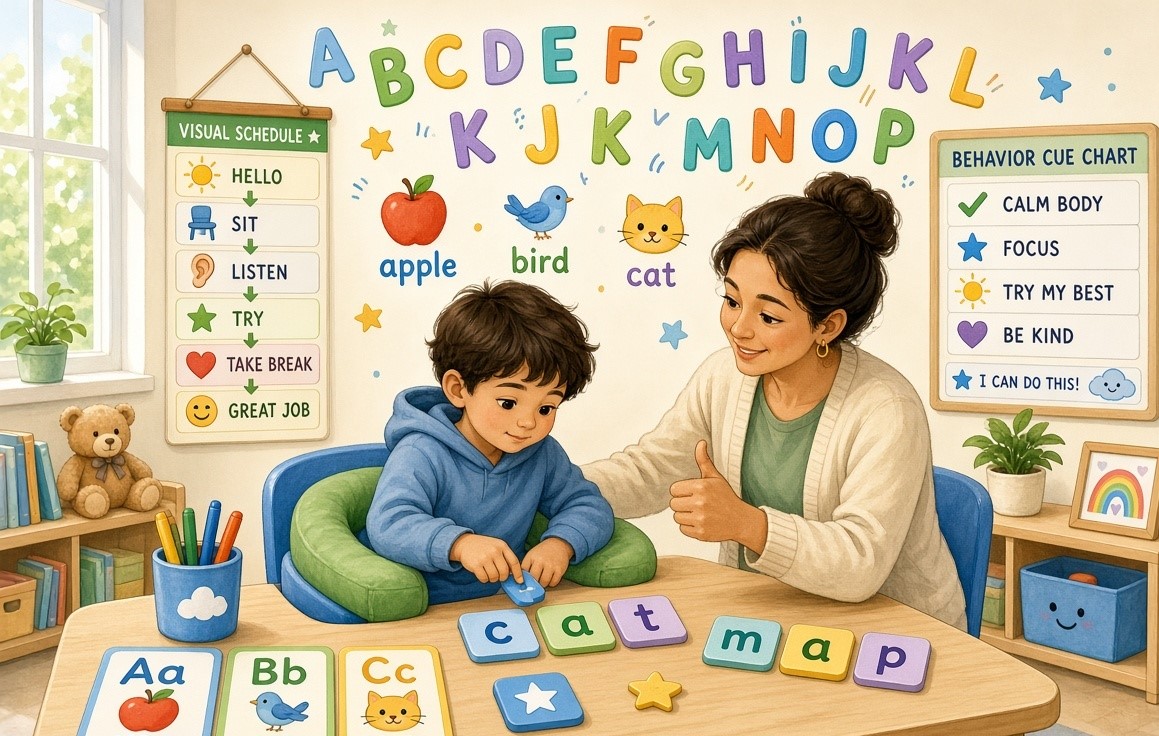
3‑Month Phonics Goal (A‑P) for Mild ASD: IEP Guide for 3‑7 yrA practical, step‑by‑step IEP plan for Indian parents and teachers to teach phonics (A‑P) over…
🧩 Autism Corner · 17 Sep 2026
ABA Therapy for US Parents: What Indian Parents Must KnowDiscover the essential facts about ABA therapy in the United States that Indian parents and educator…
🧩 Autism Corner · 17 Sep 2026
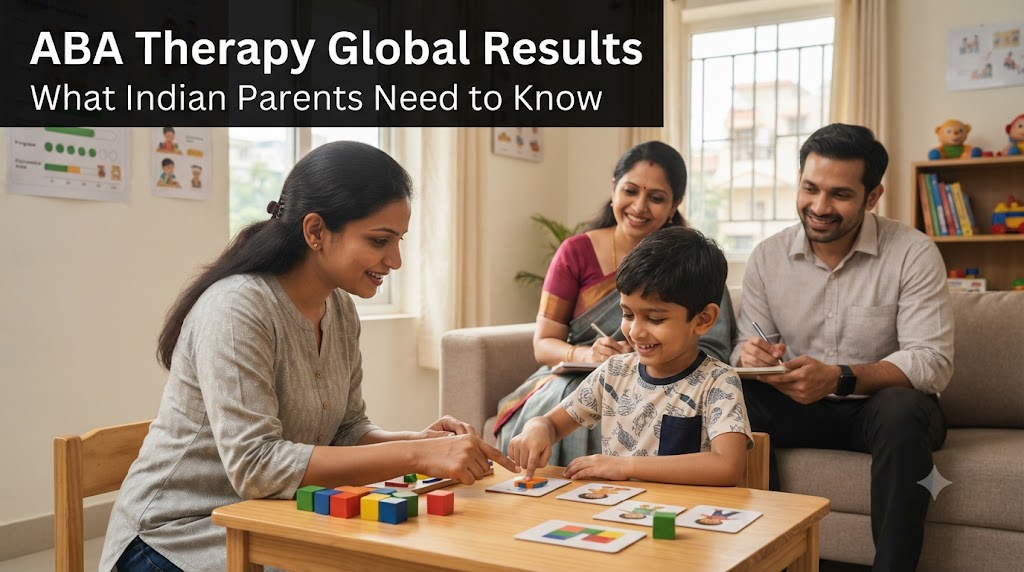
ABA Therapy Global Results: What Indian Parents Need to KnowExplore the worldwide evidence behind Applied Behavior Analysis (ABA) therapy, understand how the da…