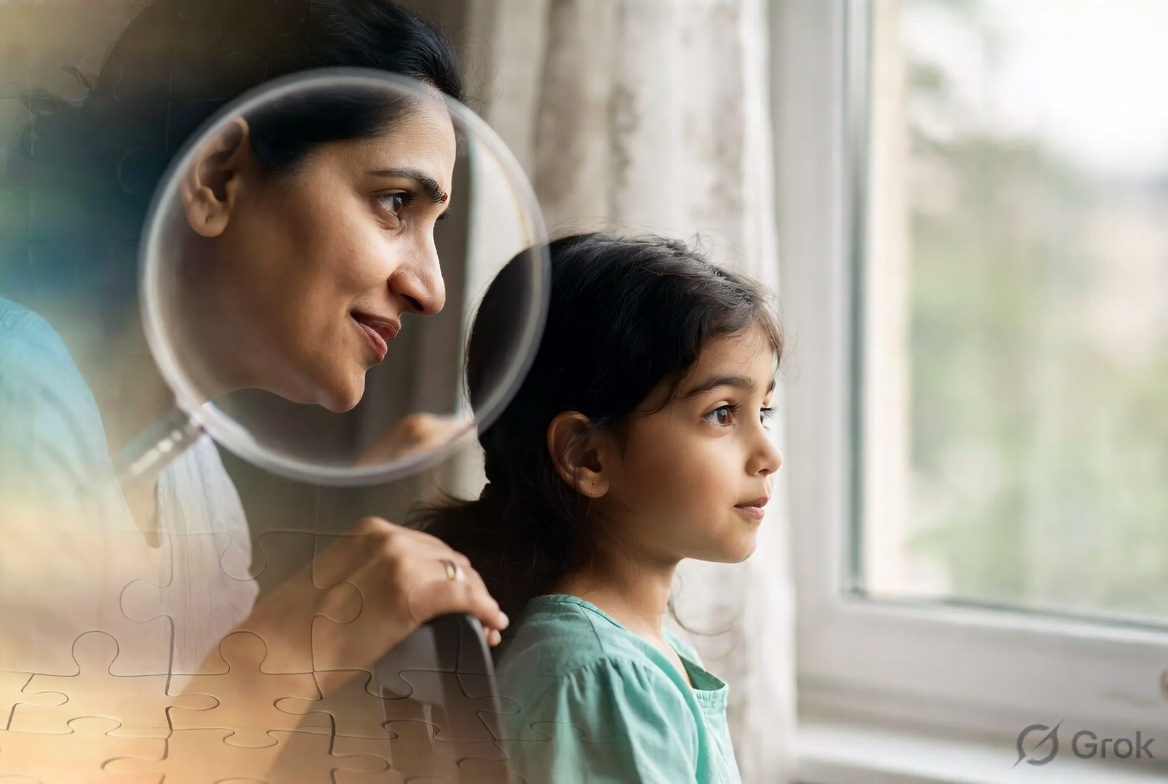
Introduction to Autism Detection
As a parent, there's nothing more heart-wrenching than seeing your child struggle to connect with the world around them. In India, where family gatherings and festivals like Navratri or Eid are an integral part of our culture, it can be especially challenging to notice when your child is not responding or interacting as expected. Perhaps you've noticed that your child avoids eye contact during family gatherings or seems overwhelmed by the sights and sounds of a bustling city like Mumbai or Delhi. Whatever the signs, it's essential to be aware of the early indicators of autism to provide your child with the necessary support and care.
Understanding Autism
Autism, also known as Autism Spectrum Disorder (ASD), is a neurological and developmental disorder that affects communication, social interaction, and behavior. According to the Indian government's National Health Mission, approximately 1 in 100 children in India are diagnosed with autism. The condition can manifest differently in each child, and early detection is critical to ensure timely intervention and support.
Early Signs of Autism
So, what are the early signs of autism that Indian parents should watch out for? Some common indicators include:
📎 Related Free Resource · Autism Spectrum
What Is ABA Therapy for Autism? A Simple & Practical Guide for ParentsABA stands for Applied Behaviour Analysis. It is an approach to understanding how behavior and learning are influenced by a perso…
📥 Download Free- Delays in speech development or lack of speech
- Avoiding eye contact or not responding to their name
- Repetitive behaviors, such as hand flapping or body rocking
- Sensitivity to light, sound, or touch
- Difficulty understanding social cues or initiating interactions
Red Flags in Indian Context
In the Indian context, some additional red flags to watch out for include:
- Your child becomes easily overwhelmed by the sights and sounds of a crowded market or festival celebration
- They have difficulty following instructions or understanding routines in a traditional Indian school setting
- They exhibit unusual behaviors during family gatherings or special occasions, such as refusing to participate in activities or becoming agitated
What to Do If You Suspect Autism
If you've noticed any of these signs in your child, it's essential to consult with a pediatrician or a specialist in autism diagnosis. In India, you can approach organizations like the Autism Society of India or the Indian Academy of Pediatrics for guidance and support. Additionally, the Indian government's scheme, the Rashtriya Bal Swasthya Karyakram (RBSK), provides free health check-ups and screening for children with disabilities, including autism.
Support and Resources
While an autism diagnosis can be overwhelming, there are many resources available in India to support you and your child. Some notable organizations include:
- The Autism Society of India, which provides advocacy, awareness, and support for individuals with autism and their families
- The Indian Academy of Pediatrics, which offers guidance on autism diagnosis, treatment, and management
- The National Institute of Mental Health and Neuro Sciences (NIMHANS), which provides comprehensive care and support for individuals with autism and other neurodevelopmental disorders
Key Takeaways
Here are the key takeaways to remember:
- Early autism detection is crucial for providing timely support and care
- Be aware of the early signs of autism, such as delays in speech development or avoiding eye contact
- Consult with a pediatrician or specialist in autism diagnosis if you suspect autism
- Utilize resources and support available in India, such as the Autism Society of India or the Indian Academy of Pediatrics
- Stay informed about government schemes and initiatives, such as the Rashtriya Bal Swasthya Karyakram (RBSK), which provide free health check-ups and screening for children with disabilities
Conclusion
As a parent in India, watching for the quiet signs of autism can be a daunting task, but it's a crucial step in ensuring your child receives the support and care they need to thrive. By being aware of the early signs of autism and utilizing the resources available in India, you can empower your child to reach their full potential. Remember, you are not alone in this journey, and there are many organizations and initiatives in India that are dedicated to supporting individuals with autism and their families. Stay informed, stay vigilant, and most importantly, stay hopeful – with the right support and care, your child can lead a happy, fulfilling life.
Free Resources Related to This Post
ABA stands for Applied Behaviour Analysis. It is an approach to understanding how behavio…
📥 Download FreePractical 2-page parent guide with warm illustrations of mom & child. Covers slow talk…
📥 Download FreeYou Might Also Find Helpful
👨👧👦 Parent Tips · 22 Sep 2026
मेरी माँ ने कैसे मेरी ऑटिज़्म से लड़ाई में मेरी मदद की: प्यार, थेरेपी और जीत की एक भावनात्मक सच्ची कहानी | सौरभमेरा नाम सौरभ है। जब मैं 9 साल का था, दु�…
👨👧👦 Parent Tips · 22 Sep 2026
How My Mom Helped Me Overcome Autism: An Emotional True Story of Love, Therapy & Triumph | Danniel LioWhen I was 9, the world felt like a puzzle missing half its pieces. I spoke differently. I behaved …
👨👧👦 Parent Tips · 06 Sep 2026
How to Manage ADHD in a 3-Year-Old at Home Without Medication: A Complete Daily Plan for ParentsPractical daily plan to manage ADHD hyperactivity in a 3-year-old at home without medication. Simple…