
As a parent, nothing brings more joy than watching your little one grow—those first smiles, the giggles, the moment they reach out for you, and eventually those wobbly first steps. But alongside all the excitement, it's important to keep an eye on how your child is developing. Every child grows at their own pace, yet there are certain milestones that most kids reach around the same age. Missing some of these can sometimes be an early clue for conditions like Autism Spectrum Disorder (ASD).
The good news? Early awareness makes a huge difference. When parents notice signs early and seek help, children often get access to therapies and support that can dramatically improve their communication, social skills, and overall development. I'm not here to scare anyone—most delays have many possible explanations—but knowledge is power. Let's talk about the key milestones to watch and the red flags that deserve attention.
Understanding Developmental Milestones
Developmental milestones are like little checkpoints in how a child plays, learns, speaks, acts, and moves. The CDC's "Learn the Signs. Act Early." program is a fantastic free resource that outlines what most children can do by certain ages.
📎 Related Free Resource · Autism Spectrum
What Is ABA Therapy for Autism? A Simple & Practical Guide for ParentsABA stands for Applied Behaviour Analysis. It is an approach to understanding how behavior and learning are influenced by a perso…
📥 Download FreeParents should track milestones in these main areas:
- Social and emotional (eye contact, smiling, sharing interest)
- Language and communication (babbling, words, gestures)
- Cognitive (problem-solving, pretend play)
- Motor skills (sitting, walking, hand movements)
Regular well-child visits include screenings, but you know your child best. Trust your instincts—if something feels off, speak to your pediatrician without waiting.
Key Milestones and Early Signs to Monitor
Here's a practical breakdown by age. These are general guidelines based on reliable sources like the CDC. Remember, one missed milestone alone doesn't mean autism, but a pattern of delays or certain behaviors warrants a closer look.
By 6 Months:
- Typical: Big smiles in response to you, cooing or making happy sounds, some eye contact during feeding or play.
- Watch for: Few or no big smiles, limited eye contact, little response to your voice or facial expressions, infrequent babbling or vocal sounds.
By 9 Months:
- Typical: Back-and-forth sharing of sounds, smiles, or expressions. Responding to their name sometimes.
- Watch for: Not responding to their name, little back-and-forth interaction, not showing facial expressions like happy or surprised.
By 12 Months:
- Typical: Babbling ("ba-ba," "da-da"), using gestures like waving goodbye, pointing to things they want, or showing you objects. Responding to their name most of the time.
- Red flags: No babbling or very little baby talk, no gestures (waving, pointing, reaching), not responding to their name, limited eye contact.
By 16–18 Months:
- Typical: Several single words, pointing to show interest (not just to request something), imitating simple actions, enjoying simple games like pat-a-cake.
- Watch for: Few or no words, not pointing to interesting things, limited gestures overall.
By 24 Months (2 Years):
- Typical: Two-word phrases (like "more milk" or "mama go"), noticing when others are hurt or upset, some pretend play (feeding a doll).
- Red flags: No meaningful two-word phrases, loss of previously gained words or skills (regression), not sharing interests with others.
Other Important Red Flags Across Ages
Beyond specific ages, keep an eye on these common signs:
- Repetitive movements — Such as hand flapping, rocking, spinning, or unusual finger movements. While all kids stim sometimes when excited, frequent or intense hand flapping that seems to serve no purpose can be a clue.
- Walking and motor skills — Most children walk by 12–15 months. Some autistic children walk on time but show toe-walking, stiff movements, or unusual ways of moving (odd crawling or transitions).
- Social engagement — Avoiding eye contact, preferring to play alone, not imitating others, or seeming uninterested in people.
- Sensory sensitivities — Over- or under-reacting to sounds, textures, lights, or smells.
- Regression — Any loss of skills (stopping babbling, words, or social behaviors they once had) is a major red flag at any age.
- Limited joint attention — Not following your point or not showing you things they find interesting.
Hand flapping and other repetitive behaviors often stand out because they can become more noticeable around 12–24 months, especially when the child is excited or stressed.
What Should Parents Do If They Notice Delays?
- Track and document — Note what your child is doing (or not doing) and when. Apps or the CDC milestone tracker can help.
- Talk to your doctor — Don't wait for the next check-up. Share specific examples: "My 14-month-old isn't pointing or babbling much."
- Ask for screening — The American Academy of Pediatrics recommends autism-specific screening at 18 and 24 months (or earlier if concerned). Tools like the M-CHAT-R are quick and helpful.
- Seek early intervention — Services like speech therapy, occupational therapy, or developmental support are often available even before a formal diagnosis. The earlier, the better—brains are most adaptable in the first few years.
- Trust but verify — Every child is unique. Some kids are late talkers and catch up fine. But when multiple areas are affected, professional evaluation brings clarity.
Final Thoughts: Observe with Love, Not Fear
Watching milestones isn't about perfection—it's about giving your child the best possible start. Most parents who notice something early feel relieved once they take action, whether it leads to an autism diagnosis or simply rules things out.
If you're reading this because you're concerned about your child, you're already doing something wonderful by educating yourself. Reach out to your pediatrician, connect with early intervention programs in your area, or explore resources from trusted organizations like the CDC's Act Early campaign.
Parenting is a journey full of unknowns, but you're not alone. Celebrate every milestone your child reaches, big or small, and remember: early support can open up a world of possibilities.
Important Note: This article is for informational purposes only and is not a substitute for professional medical advice. Always consult your child's doctor for concerns about development or possible autism.
Free Resources Related to This Post
ABA stands for Applied Behaviour Analysis. It is an approach to understanding how behavio…
📥 Download FreeA developmental milestone tracker for children with Down syndrome. Tracks motor, communica…
📥 Download FreeHow Parents of Autistic and ADHD Children Can Overcome Stress, Financial Pressure, Stigma …
📥 Download FreeYou Might Also Find Helpful

👨👧👦 Parent Tips · 06 Sep 2026
How to Manage ADHD in a 3-Year-Old at Home Without Medication: A Complete Daily Plan for ParentsPractical daily plan to manage ADHD hyperactivity in a 3-year-old at home without medication. Simple…
👨👧👦 Parent Tips · 02 Sep 2026
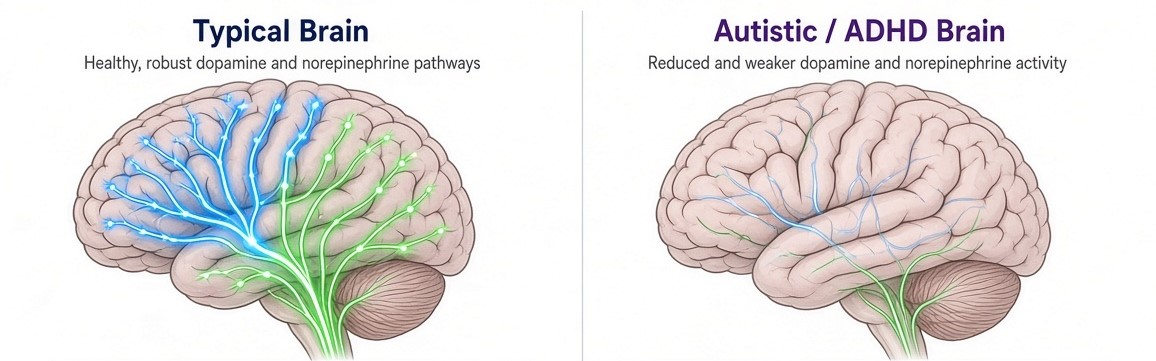
Hyperactivity in Autistic and ADHD Children: Causes and Effective SolutionsUnderstand the real biological reasons behind hyperactivity in autistic and ADHD children. This arti…

👨👧👦 Parent Tips · 01 Sep 2026
Simple Home Activities That Help Language Development in Children with Autism & Developmental DelaysChildren with autism or developmental delays often improve in behaviour and social skills with thera…