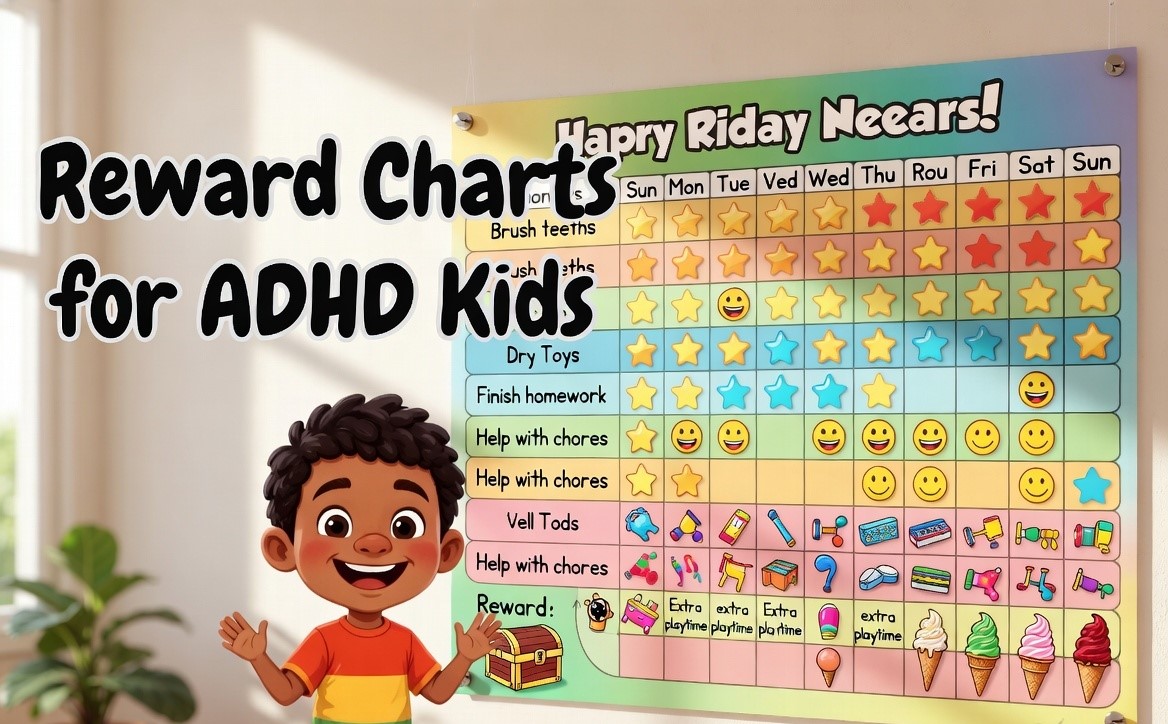
Introduction to Reward Charts for ADHD Kids
As an Indian parent of a child with Attention Deficit Hyperactivity Disorder (ADHD), you understand the challenges that come with managing their behavior and supporting their development. From the bustling streets of Mumbai to the vibrant cities of Delhi and Bangalore, many parents are searching for effective ways to help their ADHD kids thrive. One strategy that has gained popularity in recent years is the use of reward charts. But how can you use reward charts effectively with your ADHD child, and what benefits can they bring to their development?
What are Reward Charts?
Reward charts are visual tools that help children track their progress and behavior over time. They typically consist of a chart or graph with specific goals or tasks listed, and a reward system that incentivizes the child to achieve those goals. Reward charts can be used to encourage positive behavior, such as completing homework, using good manners, or engaging in physical activity.
Creating an Effective Reward Chart
To create an effective reward chart for your ADHD child, you'll need to consider their individual needs and goals. Here are some tips to get you started:
📎 Related Free Resource · Autism Spectrum
What Is ABA Therapy for Autism? A Simple & Practical Guide for ParentsABA stands for Applied Behaviour Analysis. It is an approach to understanding how behavior and learning are influenced by a perso…
📥 Download Free- Set clear and achievable goals: Identify specific behaviors or tasks that you want your child to work on, and set realistic goals for them to achieve.
- Make it visual: Use a visual chart or graph to help your child track their progress and see the rewards they can earn.
- Choose meaningful rewards: Select rewards that are meaningful and motivating to your child, such as stickers, stars, or small treats.
- Be consistent: Use the reward chart consistently and make sure your child understands the rules and expectations.
Implementing the Reward Chart
Once you've created the reward chart, it's time to implement it. Here are some tips to help you get started:
- Introduce the reward chart: Explain the reward chart to your child and make sure they understand the goals and rewards.
- Track progress: Help your child track their progress on the reward chart, and provide feedback and encouragement along the way.
- Provide rewards: When your child achieves a goal or completes a task, provide the reward they've earned.
- Review and adjust: Regularly review the reward chart with your child and adjust it as needed to ensure it remains effective.
Benefits of Reward Charts for ADHD Kids
Reward charts can bring numerous benefits to ADHD kids, including:
- Improved behavior: Reward charts can help encourage positive behavior and reduce problem behaviors.
- Increased motivation: Reward charts can motivate ADHD kids to work towards specific goals and tasks.
- Developed self-regulation skills: Reward charts can help ADHD kids develop self-regulation skills, such as self-monitoring and self-control.
- Enhanced self-esteem: Reward charts can help ADHD kids feel a sense of accomplishment and pride in their achievements.
Challenges and Limitations
While reward charts can be an effective tool for ADHD kids, there are also challenges and limitations to consider. For example:
- Over-reliance on rewards: ADHD kids may become too focused on the rewards and lose sight of the importance of the tasks themselves.
- Lack of generalization: Reward charts may not generalize to other situations or environments.
- Individual differences: Each child is unique, and what works for one child may not work for another.
Key Takeaways
Here are the key takeaways to keep in mind when using reward charts with ADHD kids:
- Reward charts can be an effective tool for encouraging positive behavior and supporting development in ADHD kids.
- Set clear and achievable goals, and make sure the reward chart is visual and easy to understand.
- Choose meaningful rewards that motivate your child, and be consistent in using the reward chart.
- Regularly review and adjust the reward chart to ensure it remains effective.
- Consider the individual needs and differences of your child, and be patient and flexible when implementing the reward chart.
Conclusion
In conclusion, reward charts can be a valuable tool for Indian parents and educators working with ADHD kids. By creating an effective reward chart and implementing it consistently, you can encourage positive behavior, support development, and help your child achieve their full potential. Remember to be patient, flexible, and understanding, and to celebrate the small victories along the way. With the right approach and support, your ADHD child can thrive and reach new heights. As the Indian government's schemes such as the National Education Policy (NEP) 2020 aim to promote inclusive education and support for children with special needs, it's essential to empower parents and educators with the knowledge and tools they need to make a positive impact on the lives of ADHD kids.
Free Resources Related to This Post
ABA stands for Applied Behaviour Analysis. It is an approach to understanding how behavio…
📥 Download FreeA colorful, motivating star chart for tracking positive behaviors over 7 days. Editable go…
📥 Download FreeA customizable token board for ABA-inspired reward systems. Includes 5 and 10 token versio…
📥 Download FreePractical 2-page parent guide with warm illustrations of mom & child. Covers slow talk…
📥 Download FreeYou Might Also Find Helpful
🏫 Educator Resources · 21 Oct 2026
Identify Dyslexia in Your Child: A Guide for Indian ParentsDiscover practical ways to recognize dyslexia early in your child. This empathetic guide offers real…

🏫 Educator Resources · 12 Oct 2026
Cerebral Palsy and Physiotherapy in India: A Parent’s GuideDiscover how physiotherapy can transform the lives of children with cerebral palsy in India. This em…
🏫 Educator Resources · 12 Sep 2026
ADHD & Gifted Kids in India: Guide to Twice‑Exceptional LearnersDiscover how ADHD and giftedness can coexist in Indian children, why they are called twice‑excepti…