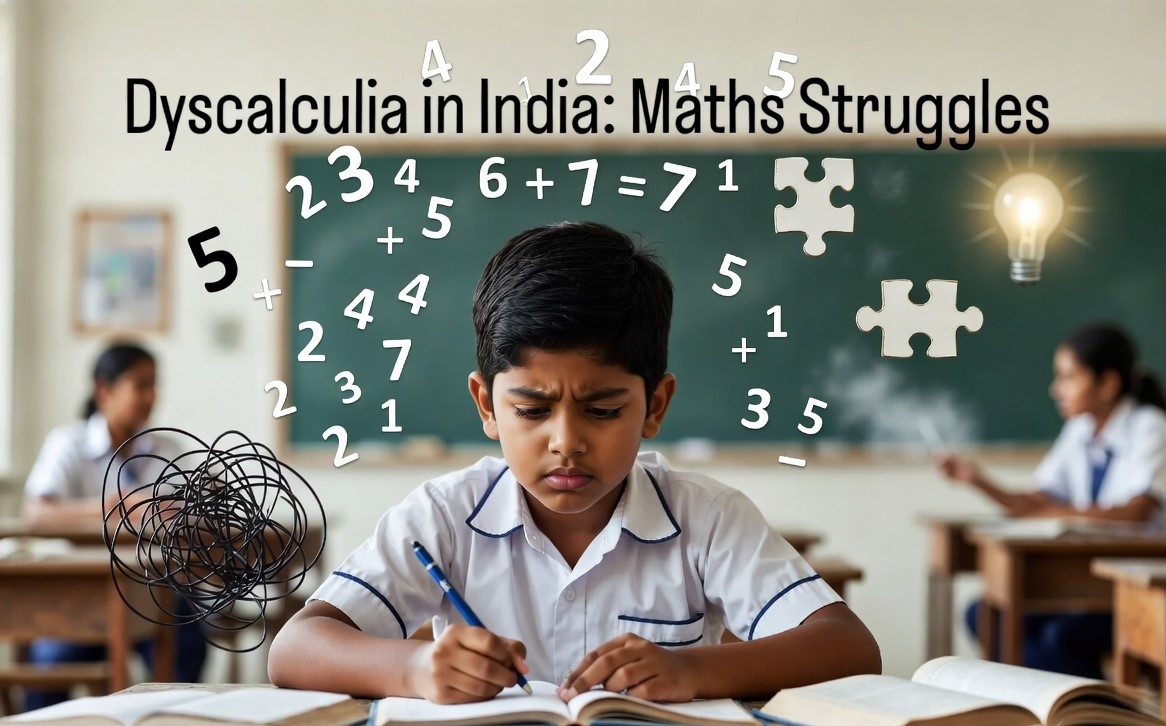
Introduction to Dyscalculia
As a parent in India, you're likely no stranger to the importance of excelling in maths. From the competitive entrance exams to the emphasis on STEM education, maths skills are highly valued in Indian schools. But what if your child struggles with even the simplest maths concepts, despite their best efforts? You're not alone. Many Indian parents have experienced the frustration and concern that comes with watching their child struggle with maths. Dyscalculia, a learning disorder that affects maths skills, is more common than you think, and it's essential to understand the signs, symptoms, and ways to support your child.
What is Dyscalculia?
Dyscalculia is a neurological disorder that affects an individual's ability to understand and work with numbers. It's often referred to as 'maths dyslexia' because it can affect a person's ability to comprehend and apply mathematical concepts, just like dyslexia affects reading and writing skills. Children with dyscalculia may have difficulty with basic maths operations like addition, subtraction, multiplication, and division, as well as more complex concepts like fractions, decimals, and algebra.
Signs and Symptoms of Dyscalculia
📎 Related Free Resource · Autism Spectrum
What Is ABA Therapy for Autism? A Simple & Practical Guide for ParentsABA stands for Applied Behaviour Analysis. It is an approach to understanding how behavior and learning are influenced by a perso…
📥 Download Free- Difficulty with basic maths operations like addition, subtraction, multiplication, and division
- Struggling to understand maths concepts, such as fractions, decimals, and algebra
- Difficulty with mental maths and estimation
- Trouble with time and money management
- Avoiding maths-related tasks or activities
Diagnosing Dyscalculia in India
Diagnosing dyscalculia in India can be challenging, especially in a country where maths education is highly valued. However, there are several ways to identify dyscalculia, including:
- Cognitive assessments and psychological evaluations
- Maths-specific assessments, such as the Dyscalculia Assessment Tool
- Observations of your child's behaviour and learning style
Supporting Your Child with Dyscalculia
If your child has been diagnosed with dyscalculia, there are several ways to support them. These include:
- Working with a special education teacher or maths tutor who has experience with dyscalculia
- Using assistive technology, such as maths software and apps, to help with maths skills
- Providing extra support and accommodations in the classroom, such as extra time to complete maths assignments or the use of a calculator
- Encouraging your child to use real-life examples to apply maths concepts, such as measuring ingredients while cooking or calculating change while shopping
Indian Context: Supporting Dyscalculia in Joint Family Dynamics
In India, joint family dynamics can play a significant role in supporting a child with dyscalculia. Family members can provide emotional support, help with maths homework, and encourage your child to practice maths skills. Additionally, Indian festivals like Diwali and Holi can be used as opportunities to practice maths skills, such as calculating the cost of decorations or measuring the ingredients for traditional sweets.
Government Schemes and Resources
The Indian government has launched several schemes and resources to support children with special needs, including dyscalculia. These include:
- The Right to Education Act, which provides for the education of all children, including those with special needs
- The National Trust Act, which provides for the welfare and support of people with autism, cerebral palsy, and other disabilities
- The Sarva Shiksha Abhiyan, a programme aimed at providing education to all children, including those with special needs
Key Takeaways
Here are some key takeaways to keep in mind:
- Dyscalculia is a learning disorder that affects maths skills and is more common than you think
- Identifying the signs and symptoms of dyscalculia is crucial in providing the right support for your child
- There are several ways to support your child with dyscalculia, including working with a special education teacher, using assistive technology, and providing extra support and accommodations in the classroom
- Indian joint family dynamics can play a significant role in supporting a child with dyscalculia
- The Indian government has launched several schemes and resources to support children with special needs, including dyscalculia
Conclusion
As a parent in India, it's essential to be aware of the signs and symptoms of dyscalculia and to provide the right support for your child. With the right diagnosis, support, and accommodations, your child can overcome the challenges of dyscalculia and excel in maths and other areas. Remember, every child is unique, and with patience, understanding, and the right resources, your child can reach their full potential. Don't hesitate to reach out to special education consultants, maths tutors, and other resources to support your child's maths journey. Together, we can empower our children to overcome the challenges of dyscalculia and achieve their dreams.
Free Resources Related to This Post
ABA stands for Applied Behaviour Analysis. It is an approach to understanding how behavio…
📥 Download FreeMulti-sensory number sense activities for children with dyscalculia. Uses visual anchors, …
📥 Download FreePractical 2-page parent guide with warm illustrations of mom & child. Covers slow talk…
📥 Download FreeYou Might Also Find Helpful

🌟 Success Stories · 08 Jun 2026
न्यूरोडायवर्सिटी एक कमजोरी नहीं, ताकत हैवैज्ञानिकों, कलाकारों और एथलीटों की य�…

🌟 Success Stories · 08 Jun 2026
मिकी की कहानी: चुप्पी से सफलता तक"वो पागल लड़का है!" पार्क के एक कोने में �…
🌟 Success Stories · 18 May 2026
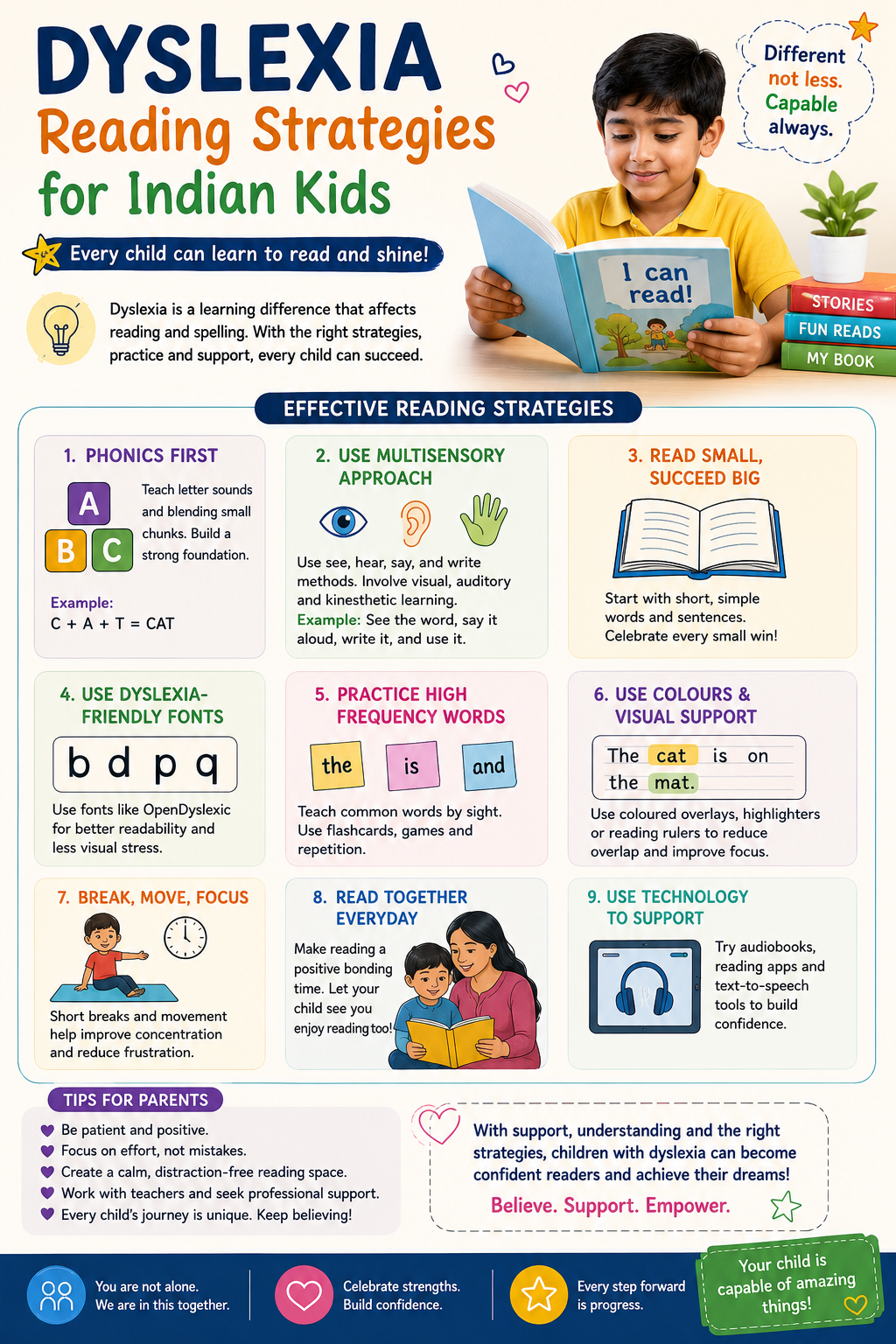
Dyslexia Reading Strategies for Indian KidsDiscover effective reading strategies to help your dyslexic child thrive in India's competitive scho…