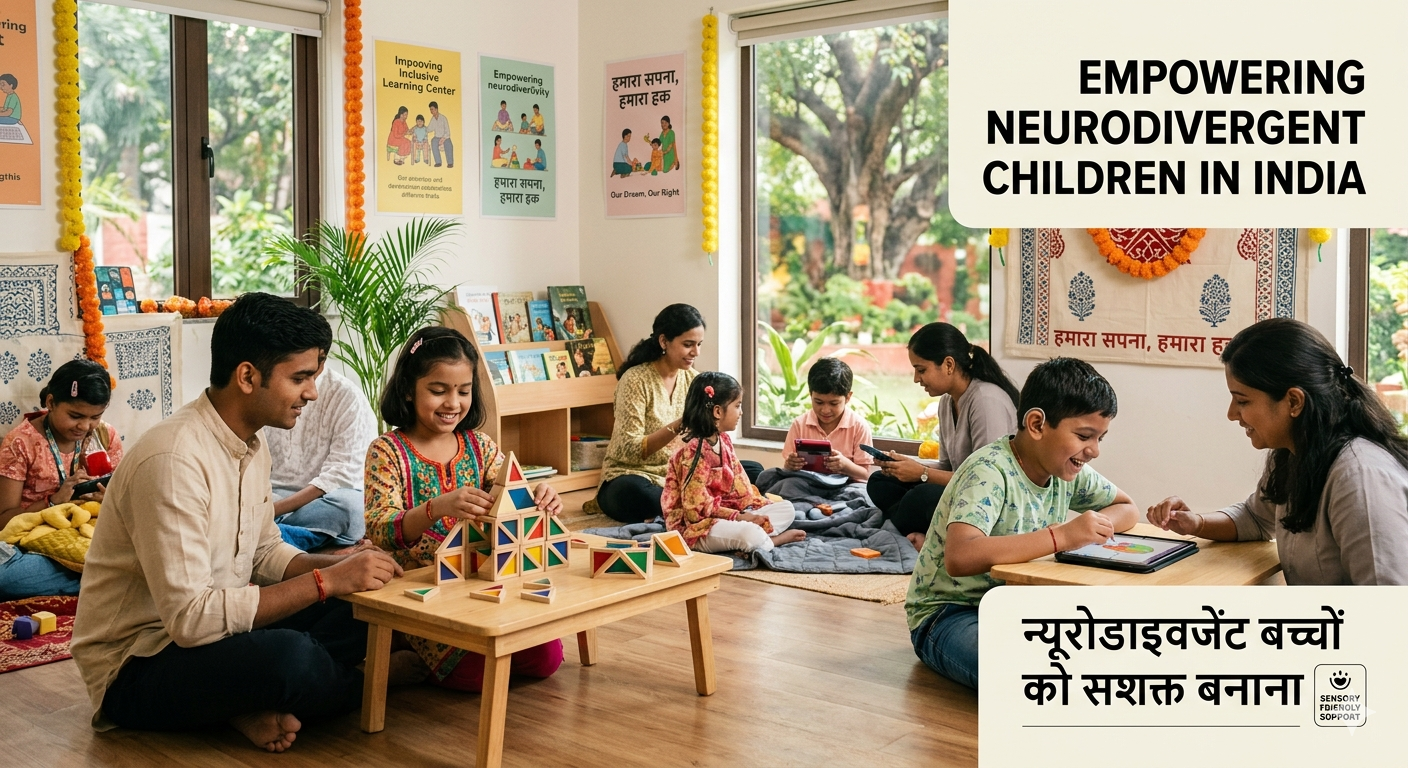
Empowering Neurodivergent Children in India: A Guide for Parents and Educators
Imagine a child who struggles to cope with the sights and sounds of a bustling Indian festival like Diwali, or a student who finds it challenging to focus in a crowded classroom at a local school like Kendriya Vidyalaya. For many Indian parents and educators, supporting neurodivergent children can be a daunting task, especially when navigating the complexities of the Indian education system.
Understanding Neurodivergence
Neurodivergence refers to the diversity of human brains and minds, encompassing a range of conditions such as Autism Spectrum Disorder (ASD), Attention Deficit Hyperactivity Disorder (ADHD), Dyslexia, and more. In India, it is estimated that approximately 10-15% of the population lives with some form of neurodivergence.
Common Challenges Faced by Neurodivergent Children
Neurodivergent children in India often face unique challenges, including social stigma, lack of awareness, and inadequate support systems. For instance, a child with ASD may struggle to make friends in a traditional Indian school setting, while a student with Dyslexia may find it difficult to keep up with their peers in a subject like Hindi or English.
📎 Related Free Resource · Autism Spectrum
What Is ABA Therapy for Autism? A Simple & Practical Guide for ParentsABA stands for Applied Behaviour Analysis. It is an approach to understanding how behavior and learning are influenced by a perso…
📥 Download FreeInclusive Learning Strategies for Neurodivergent Children
To support neurodivergent children in India, it is essential to adopt inclusive learning strategies that cater to their diverse needs. Some effective approaches include:
- Personalized learning plans that accommodate individual learning styles and strengths
- Multi-sensory teaching methods that incorporate visual, auditory, and kinesthetic approaches
- Assistive technology, such as text-to-speech software or speech-to-text tools, to facilitate communication and learning
The Importance of Early Intervention and Diagnosis
Early intervention and diagnosis are critical in supporting neurodivergent children in India. By identifying and addressing neurodivergent conditions early on, parents and educators can provide targeted support and accommodations, helping children to reach their full potential.
Creating a Supportive Environment for Neurodivergent Children
Creating a supportive environment for neurodivergent children in India requires a collaborative effort from parents, educators, and the wider community. Some strategies for building a supportive environment include:
- Establishing a daily routine that provides structure and predictability
- Encouraging social interactions and friendships through activities like sports or clubs
- Fostering a growth mindset and promoting self-advocacy skills
Accessing Resources and Support in India
In India, there are various resources and support systems available for neurodivergent children and their families. Some notable organizations and initiatives include the Autism Society of India, the ADHD Association of India, and the Dyslexia Association of India.
Key Takeaways
- Neurodivergent children in India require inclusive learning strategies and supportive environments to thrive
- Early intervention and diagnosis are essential in addressing neurodivergent conditions
- Collaboration between parents, educators, and the community is crucial in creating a supportive environment for neurodivergent children
- Accessing resources and support systems, such as organizations and initiatives, can provide valuable guidance and assistance
By embracing neurodiversity and providing tailored support, Indian parents and educators can empower neurodivergent children to reach their full potential and lead fulfilling lives. At SaathiLearn India, we are committed to providing expert guidance and practical tips to support neurodivergent children and their families. Join us in our mission to create a more inclusive and supportive learning environment for all children in India.
Free Resources Related to This Post
ABA stands for Applied Behaviour Analysis. It is an approach to understanding how behavio…
📥 Download FreePractical 2-page parent guide with warm illustrations of mom & child. Covers slow talk…
📥 Download FreeYou Might Also Find Helpful

👨👧👦 Parent Tips · 22 Sep 2026
मेरी माँ ने कैसे मेरी ऑटिज़्म से लड़ाई में मेरी मदद की: प्यार, थेरेपी और जीत की एक भावनात्मक सच्ची कहानी | सौरभमेरा नाम सौरभ है। जब मैं 9 साल का था, दु�…

👨👧👦 Parent Tips · 22 Sep 2026
How My Mom Helped Me Overcome Autism: An Emotional True Story of Love, Therapy & Triumph | Danniel LioWhen I was 9, the world felt like a puzzle missing half its pieces. I spoke differently. I behaved …
👨👧👦 Parent Tips · 06 Sep 2026
How to Manage ADHD in a 3-Year-Old at Home Without Medication: A Complete Daily Plan for ParentsPractical daily plan to manage ADHD hyperactivity in a 3-year-old at home without medication. Simple…